1927 - 1940

A Village at Last

If you want a glimpse of Northfield’s past, head over to Bosworth Lane, then walk south on Dickens, and you’ll find the real story of what was happening in 1927, the year our town ditched the name Wau Bun and became Northfield.

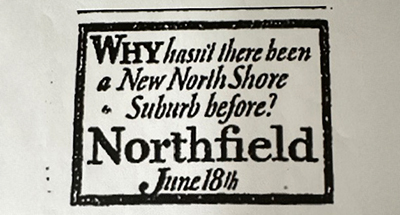
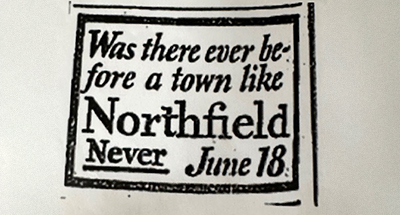
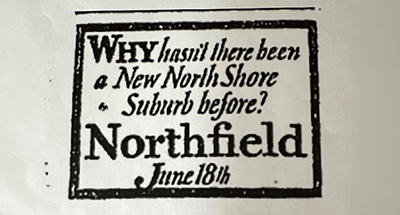
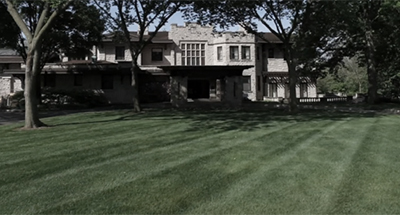
What you’ll see as you walk south are four model homes on the west side of the street at 282, 288, 294 and 298 Dickens—they represent the first housing plan ever approved by our town’s fledgling village board in June 1927, and they were called the “George F. Nixon First Addition to Northfield” plat. One thing Nixon knew how to do was sell. In addition to promising a free chicken dinner on Sundays to all prospective buyers, he carried bold ads in the Chicago Tribune (“Was there ever before a town like Northfield? Never!” “Why hasn’t there been a new North Shore Suburb before? Northfield!”) to lure clients from the city to view his showcase model homes that featured a first for our town: electricity, plumbing and sidewalks.

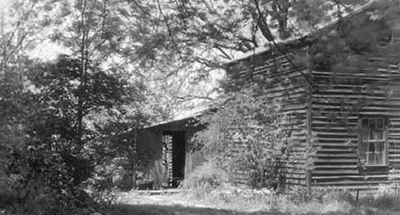
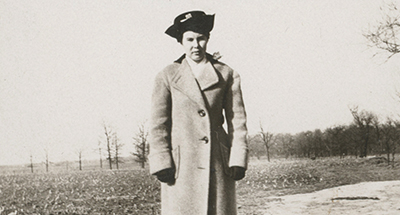
But that’s not the whole picture. If you walk west about a half mile to Bracken Lane, imagine a log cabin just south of Willow Road, where Julia Donovan was living in the same shanty her father built in 1855 when he brought his family to Northfield in a coal wagon. Julia was now age 75. She made ends meet boarding the teacher from Brown School, right across the street. She would live in her log cabin, with no electricity or central heat, until she died in 1941 at age 91.

Next door, just west of Julia, at 2264 Willow Road, imagine a rustic, two-story wood house where Julia’s best friend Lucy Brackendorf shared a home with her brother Peter on the 40 acres their father cleared by hand in 1860. For years, Peter was a pig farmer. Now, he and Lucy made their living boarding horses for wealthy North Shore families who loved Northfield’s open, bucolic fields, perfect for pleasure riding or fox hunts. Lucy was a high-octane age 65, and she would live there until she died at age 94 in 1955.

And, finally, one last scene to imagine: across the street, west of Somerset Lane, picture a rundown farmhouse and barn, built on what is now 2211 Old Willow Road, where German immigrant Carl Metz cleared 13 acres in 1866. Metz’s granddaughter, Gustie Ahrens, was the third generation to be living there in 1927 with her husband, two kids and her parents. They had no indoor plumbing and only a wood stove for heat. Water was brought in from a pump near the house. They farmed, using a team of horses. Each week, they hauled crates of produce into the city to sell at a wholesale market. They also ran a vegetable stand on Old Willow Road.

No plans to change

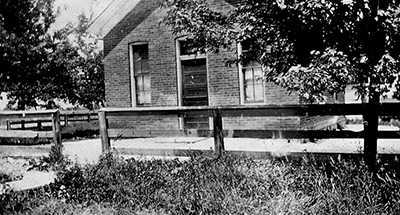
Gustie was a proud graduate of Northfield’s one-room Brown School, her neighbor to the west. She spent her days working the fields that lay between her home and the school, helping her husband plant and harvest beets, carrots, beans and corn, praised throughout the North Shore as the most succulent and fresh. Gustie’s mom cooked all the meals and cared for the kids while she and her husband managed the farm. In the summer her kids helped run the family vegetable stand.

It was a hard life. Money was tight. But Gustie had a green thumb, and she loved her land, especially her flower gardens, brimming with dahlias, zinnias and geraniums, a stunning sight along Old Willow Road. She stayed close to Julia and Lucy. When the cold winters became unbearable for the aging Julia, and the water in her house froze, Gustie brought over warm food and helped tend Julie’s chickens while she spent the night with a nearby niece. “We were always there for each other,” recalled Gustie’s daughter, Ruth Ahrens Hacker. “Northfield was a very poor community at the time, but if you needed help, your neighbors were always right there.

“We all loved the land,” she said. “That’s what everyone loved about Northfield.”

Gustie had to sell all but two acres of her farm in 1956 because her family couldn’t afford the taxes. She lived in the family farmhouse until she died in 1986.

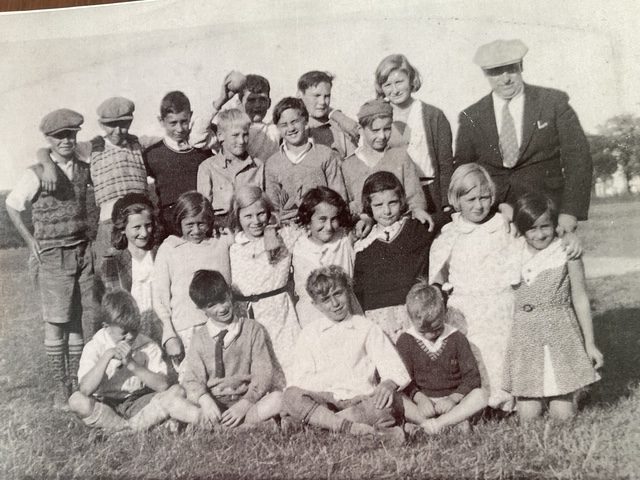
These Northfield pioneers were all shockingly out of step with the way the rest of the world was moving. Each morning, Julia and Lucy stood outside and greeted the local school kids who passed by their homes as they walked west along Willow Road to get to Brown School. Sometimes, school principal William Cray dropped by to sit on Lucy’s front porch to chat.

And that’s the real picture of Northfield in 1927: on the one hand were the sophisticated and deep entrepreneurial pockets of Samuel Insull and George F. Nixon, trying to mold our town their way; on the other were the stalwart, close-to-the-land farm families like Julia Donovan, Lucy Brackendorf and Gustie Ahrens, who may have pulled more weight in the direction Northfield would ultimately take than they knew.

What made Northfield different

This tension between the “haves” and “have-nots” is a big reason why Northfield’s journey to becoming a town was so different from other surrounding communities and distinguished it with a unique rural charm. Three forces were in play:

First, no other North Shore town was so late in forming a municipality, and so short on the resources and expertise needed to do it.

Second, no other town felt the battle between the old-timers and newcomers as acutely as Northfield because—like Julia, Lucy and Gustie would tell you—our founding families stayed wedded to their rural, frugal lifestyles for so long, and were so reluctant to change.

Third, no other North Shore town fell under the spell of the aggressive, sophisticated and ambitious real estate promoter, George Nixon, and his mentor, global electricity king Samuel Insull, whom our forefathers finally had to outflank.

These were the polarizing forces at work shaping Northfield when it became a town, and they set the stage for some of the early challenges we faced as we grew.

In 1927, it all boiled down to this: right outside Julia Donovan’s tidy log cabin, a cutthroat, fast-paced world driven by advances like electricity and automobiles was shifting Northfield into a whole new gear. There was also a real estate circus.

At the same time, a group of farmers—with no municipal government training or experience, and no promise of help on the horizon—were entrusted to prod their newborn town into the modern age. Watching their every move, and imposing his will at every step, was George Nixon, motivated by his own-self-interest and ambition.

A Chicago Tribune story appearing on June 5, 1927—“City’s Latest Suburb Will Be at Northfield”—brings it all to life.

At this point, our local citizens had not yet presented their petition to the Village board to scrap the name Wau Bun. It would be another month before trustees even voted on changing the town’s name. But that didn’t stop George Nixon from boldly announcing the new name, and detailing a grand plan for Northfield’s future.

“Chicago’s newest suburb is to be located at Northfield. Plans for the new town were announced last week by George F. Nixon and Co., the developers,” the Tribune said.

That same week, the Winnetka Talk proclaimed, “Nixon Company Lays Out New Model Town,” describing Nixon’s firm as, “… the founders of this new town,” that had “given to Northfield the name of ‘super suburb,’ Nixon’s efforts would, “set a new standard for residential suburbs.”

Fact or fiction?

Added the Tribune: “Northfield is not going to be allowed to grow in a haphazard manner, but has been zoned, and will follow carefully planned lines. Robert W. Hoffman, landscape architect who laid out the Henry Ford estate at Dearborn, has developed a village plan…probably most interesting….will be a civic center a short distance from the electric station. The business district will be grouped around a public mall, or plaza….which will be flanked by 100-foot streets. It is hoped to have all the business buildings in the English style of architecture.”

The story goes on to explain the zoning requirements for new housing and apartments, specifying building restrictions and costs.

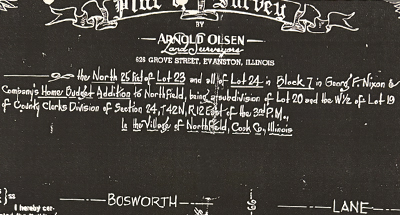
How true was any of this? It was not. But George Nixon was determined that Northfield rise above its rural past, and not in a small, incremental way, but in a quantum leap. This was his moment. His first step had been to get the board to approve his “First Addition to Northfield Plat of Survey,” on June 1, 1927, detailing the four houses on Dickens he planned to build. He then turned that first housing plan into a full-fledged announcement to the Tribune, proclaiming an entire new municipality, conceived by him, to be unveiled at a grand opening on Saturday, June 18th.

For $10 down, buyers could get in on the action, purchasing lots he and Insull were selling.

“Yesterday, Northfield was born,” ballyhooed an ad Nixon ran the same day of the grand opening under the headline, Northfield, A New Model Suburb Open Today.

And there was more: “Welcomed with impressive ceremony, with music, with official words of good will. Welcomed by thousands of citizens of Greater Chicago. If you were not among the thousands who yesterday visited Northfield, come today!

“Now Northfield is ready for you. A brand-new made-to-order suburb in this North Shore garden spot—choicest residential region in Greater Chicago.”

Even John Happ, a Nixon loyalist, helped pitch his town’s grand opening: “We start out Saturday as an infant community, newly-born, but we shall be the fastest-growing civic baby Cook County ever saw,” he told the Winnetka Talk in June 1927.

Nixon added his own hyperbole: “We have profited by the errors of other communities and our engineers have studied them from coast-to-coast,” he told the Winnetka Talk. “Everything about Northfield will be new. There will be nothing to tear out and rebuild. No mistakes to remedy. We have set some high ideals for Northfield…it is just as if (new buyers) could have a slice of the Evanston of pioneer days at pioneer prices.”

Trustees had not even voted on a name change. Our village was just eight months old. What did trustees make of all the noise?

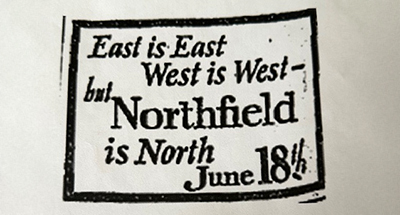
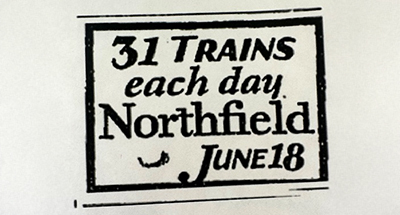
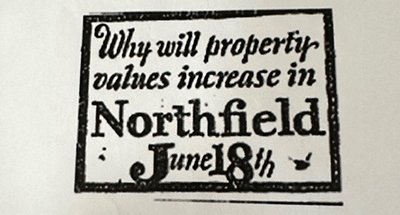
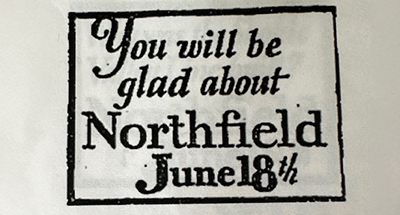
George F. Nixon’s ads in the Chicago Tribune in June 1927, a month before our town switched its name from Wau Bun. He was fearless in promoting Northfield.

Working with what you have

The truth was, as they navigated all the uncertainties and challenges of launching a new village, it was still hard to decide whether Nixon was friend or foe. But trustees had to start somewhere. And right off the bat, getting to use Nixon’s offices as their municipal headquarters was a step up from Al Levernier’s general store. They had also accepted from him, “with thanks,” a deed on which to build a village hall and village green.

And from that willingness to accept Nixon’s elbowing his way to the front of the line to shape Northfield’s future came a tenet central to Northfield’s culture: you had to work with what you had. You did not have the resources of other towns, so you had to be clever in the ways you solved problems.

How did our pioneer families feel about all the real estate hoopla? Julia Donovan, a few years later, told the Chicago Daily News that she felt a little wistful about what a special place Northfield was when she was growing up. “Everyone was always singing or whistling,” she said. But in this new modern era? She lamented that people didn’t seem to hum anymore.

Our village fathers may have felt that way, too. But it was their job to improve the lot of its citizensnewcomers and old-timers alikeso they forged ahead, and here is a sampling of the challenges they faced, big and small, unique to Northfield:

How Northfield got a building code

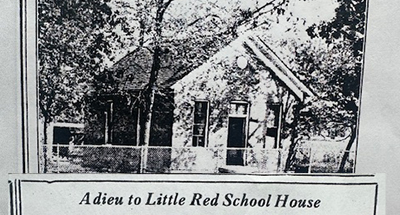
Finding a building commissioner: It all started with a big battle over Brown School. For years, tensions had been growing between old-timers and newcomers over the woeful state of Brown School. To visitors from other towns—and more were coming into Northfield amidst George Nixon’s real estate buzz and the popularity of Sunset Ridge Country Club—Brown School was a joke. But all three District 29 school board members stood firm. They didn’t see why taxes should be raised to build a new school.

This created a firestorm between the “tear-down-the-school” advocates and proponents of the status quo. Both sides rang every doorbell in town. Things got so heated that one evening, the “build-a-new-school” squad got locked out of Brown School when they came to meet. They had to enlist lawyers to force school board members to bow to the law and allow them to gather there.

It was an all-out battle, resulting in a referendum held in September 1929 to determine which side would win. The “tear-down-the-school” citizens prevailed. A $20,000 bond issue was passed; a new, progressive school board was voted in; and two more acres at the northeast corner of Willow and Sunset Ridge Road were purchased from Lucy Brackendorf to build a new school.

And here’s where the cleverness and resourcefulness of Northfield’s village board fit in.

So far, with the help of George Nixon, trustees had been successful in appointing a zoning commission, and enlisting Samuel Insull’s company to bring light and power into the village in 1928, along with a natural gas distribution system. All of this would ensure, once the new school was built, that the days of an outhouse and wood burning stove for local kids would come to a merciful end. Also—a good three decades after other communities—the village in 1929 brought in poles and wires for phone service.

What trustees hadn’t accomplished—most likely because they didn’t have the resources to hire an expertwas drafting a building code, or finding someone to enforce it. As a result, they had no idea how or where new buildings in Northfield were being constructed.

Getting help where you can

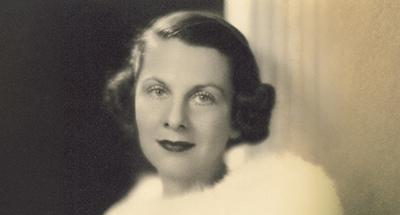
Help came in an unexpected way. A newcomer to Northfield, Dorothy Clark, was becoming a legend around town as the real driver behind the dream of a new school. The daughter of a college professor and graduate of Bryn Mawr, Dorothy had come to Northfield in 1924 with her wildly successful executive husband because they loved its rural charm. They bought 16 acres, today Old Hunt Road, and built a nine-bedroom mansion complete with swimming pool, manicured lawns, a chauffeur, butler, cook and nannies for their three children.

Dorothy could have sent her children to private school, but she wanted a beautiful, first-class school for Northfield, so she brought her zeal for the arts, education and architecture—plus her deep pockets—to work with the local school board and make it happen.

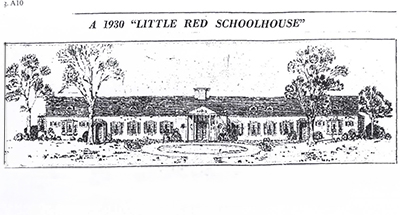
She enlisted Ernest Benkert, a German-born Winnetka architect trained at the Armour Institute of Technology, to design an elegant building with the look and feel of a New England school, complete with fireplace, patterned carpeting and pine paneled walls with wood imported from England. No expense was spared. As Julia Cray Kennedy, daughter of school principal William Cray, explained, “It was one-in-a-million—everything a rural school shouldn’t have been!”

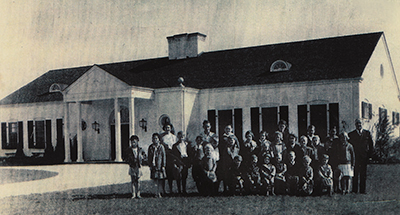
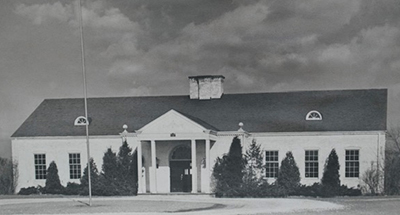
Opened in the fall of 1930, the new Sunset Ridge School—which took the same name as the thriving country club down the streetwas a triumph for architect Ernest Benkert.

The same month the new school opened, Northfield’s village board got a letter from New Trier township’s assessor, asking for a “report on improvements on the land in Northfield.” The board responded that Northfield didn’t yet have a building ordinance. As a result, our town did not require permits to construct new buildings; and Northfield “has no record from which the information can be given.”

Clearly, this was embarrassing for the village to admit to New Trier Township that they had no clue how village land was being used, or how buildings were being constructed. So what did they do?

As the accolades poured in over the new Sunset Ridge School, trustees got an idea. They asked the school’s architect, Ernest Benkert, if he might help them write a building code, and they sent him a draft they had cobbled together.

November 1930 board minutes tell the rest. “He (Benkert) made a number of suggestions and said that he considered the ordinance one of the best he had ever read.” Three months later, Benkert was appointed Northfield’s first Building Commissioner, advising trustees from his Winnetka office whenever he was needed, while still running his architecture practice. That’s how things got done.

Growing pains

And there were smaller challenges, too.

Speed limits: Of great urgency in October 1927 was the need to paint two signs to be posted on utility poles on the east and west boundary lines of the village, enforcing a 20-mile-per-hour speed limit throughout Northfield.

Too cold to meet: In December 1927, the board had to run over to the local train depot to meet, “due to the inclemency of weather” and the “lack of heat and light in the real estate office on Willow Road near Happ Road.” A big push to bring in proper utilities came the following year.

Budget beginnings: The first fiscal budget for the town in 1927 was $5,000. The next year it grew sixfold to $32, 600.

Our first village records: Northfield’s first big office expense: in August 1928 the village clerk was authorized to buy a steel filing cabinet, “for the purpose of safely keeping the records of this Village.”

Can we please get a phone? Another pressing need: In August 1928, Northfield’s first chief of police, Palmer Giambastian, was desperate to get a single-party phone line installed in his house, “in order that he could be reached by the citizens of the village in case of need.” His many attempts, he said, were futile, so the village board drafted an ordinance to “use all possible haste” to install a single-party line in Giambastian’s home because, “the peace and safety of our village and its citizens is endangered since it would be impossible to reach the village marshall in case of emergency.” Our village board was then turned down by Illinois Bell, after they asked for a lower rate on phone service. There is no evidence Giambastian ever got his phone.

Do we really need police cars? More disappointing news: the board also turned down a request from its chief of police when he asked for an insurance policy to cover his car. They cited the high cost of insurance, plus the “slight use” of a car in police work.

Drinking binge: Even more bad news: Northfield’s first chief of police was “removed” from his job the following December 1928 after being jailed for thirty days and fined $400 for violating the 18th Amendment and the Volstead Act, which banned the sale or possession of alcohol. His wife was also fined $300, but avoided jail.

Second act: In March 1937 the couple was granted a permit by the village to open a restaurant, cocktail lounge and tavern at 1622 Willow Road, the successful Willow Inn restaurant, which drew North Shore diners to Northfield for decades. A prominent sign on the door through the 1950’s was: “Men Must Wear Shirts!” Giambastian was also the first to be granted a license to sell liquor in Northfield when Prohibition was repealed in 1933.

Police expenses: The next recorded expense in July 1931 for the new chief of police: $2.50 for a pair of handcuffs in July 1931.

No good for golf: When a golf school and practice range was suggested as a new business for Northfield in June 1931, the board cautioned, “This Village cannot be held responsible for any damage done by stray golf balls.”

Ban horses on streets: Horseback riding enthusiasts who liked coming to Northfield were dealt a blow when the village announced in June 1932, “All persons on horseback are not permitted to traverse” our town’s public streets.

Take down those trees: Willow trees on Willow Road were ordered removed in July 1932 because they were “dangerous to the public traveling on Willow Road.”

Put the rats near Northfield? Exactly how Northfield was seen by its neighboring towns—(hint: it was never viewed as a garden spot)—was made clear in October 1927 when the Glencoe village board was grappling with the problem of how to dispose of an influx of rats, and “decided to investigate the possibility of locating a $5,000 garbage incinerator near the city limits of Northfield.”

Water windfall: The days of getting water from an outdoor hand pump were over when Northfield in March 1929 forged a pact with Winnetka to get Lake Michigan water from them. Cast iron water mains were laid throughout the village, and our village president served as Water Superintendent, collecting water bills from residents. In exchange, Northfield “disannexed” thirty acres south of Willow Road and west of Hibbard and gave the land to Winnetka.

Why not a beach for Northfield? In July 1933, the village attorney was asked to write the Village of Winnetka, asking that residents of Northfield be allowed to use Winnetka’s beaches, “Owing to the fact that our Village purchases its water from Winnetka, our people feel that they ought to be granted this concession.” There is no record of Winnetka ever responding.

Firefighters from Winnetka: Northfield couldn’t afford a fire department, so the Village of Winnetka in August 1928 agreed to provide Northfield’s first fire-fighting services for $25 a call—later raised to $75to be paid by homeowners.

Bringing the bars into Northfield: Once Prohibition was repealed, our village president donned a second hat. He became Northfield’s Liquor Commissioner.

Appearance matters: Board minutes in 1947 asked that, “somebody be employed to clean up the lawn at Village Hall.”